

As SPARK continues to explore AI within product development, some of the clearest applications for our Industrial Design team have not necessarily been in generating concepts. Instead, AI has proven useful in supporting familiar, labor-intensive visualization tasks.
SPARK Industrial Designer Jon Kyte describes much of his current workflow with AI this way:
“The general workflow has been more about helping with laborious tasks such as cropping backgrounds from images and generating renderings and products within a scene. Doing those tasks the traditional way — using Photoshop and rendering programs like KeyShot — is labor intensive. So, quickly generating an image of a product in context is a huge time saver.”
This is an important distinction in how SPARK has been approaching tools like Vizcom. The designer is still developing and directing the concept. AI can then help accelerate some of the work involved in communicating that concept visually.
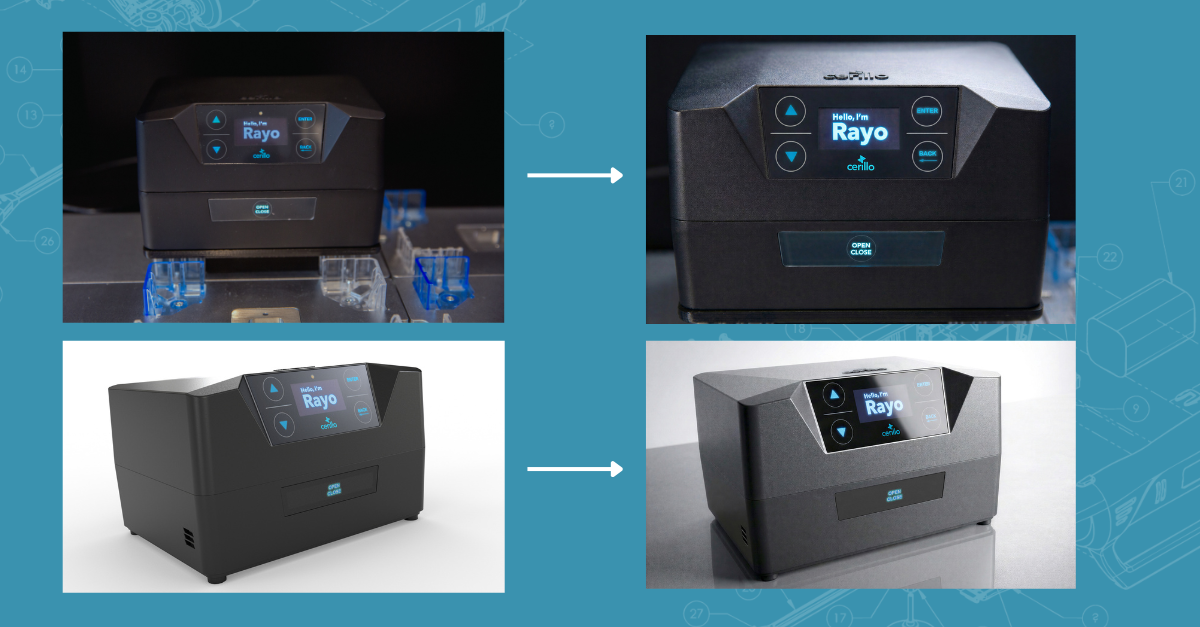
For example, Jon has taken both product photography and renderings of Cerillo’s Rayo, a next-generation multiwavelength microplate reader, and used AI to enhance or recontextualize those existing visuals. The results can look convincing at first glance, but they are not necessarily perfect. Details change, proportions shift, or something that initially appears polished does not hold up under closer inspection.
The Efficiencies and Frustrations of AI
SPARK Design Manager Chris Murray has experienced both sides of that process through practical use of Vizcom.
“In one example, I used Vizcom to place a product in a certain environment and in an individual’s hand in order to demonstrate the product in use. After a few iterations, the image still included an obvious error of an extra finger. Even by the time that particular error was resolved, the image quality had declined, and the engraving on the product had become distorted.”
Moving from sketches to generated renderings presented similar challenges. A result could improve through several iterations without ever becoming exactly what the designer intended. In other cases, solving one visual issue could introduce another.
Those experiences led Chris to a practical question:
“At what point is continued regeneration more efficient than simply taking the photograph or creating the rendering from scratch?”
That question gets at an important part of AI-assisted visualization. Generating the first image can be incredibly fast, but that does not automatically mean the entire workflow is faster. Efficiency depends on how close the output is to what the designer actually needs and how much time is spent correcting it afterward.
Chris sees some of that improving as designers become more familiar with the tool:
“Designers can become better at directing the tool and reducing the number of iterations. Still, Vizcom requires careful guidance, often using visual and technical language that comes from design expertise.”
In other words, becoming good at using the AI tool does not eliminate the need for design knowledge. In many cases, it makes that knowledge more visible. The designer still needs to recognize what is incorrect, describe what needs to change, and understand whether the image is actually communicating the intended product.
Visualization Is Not the Same as Design
That distinction matters because generated imagery can be persuasive. A polished image can make an idea appear resolved even when important questions remain.
An Industrial Designer brings an understanding of form, proportion, user interaction, materials, manufacturing, assembly, and the intent behind the product. AI can help visualize what the designer asks it to show, but the quality of that direction — and the ability to evaluate the result — still comes from the person using the tool.
For Jon, experimenting with new visualization tools has actually reinforced the importance of a very traditional one: sketching.
“This is where the power of sketching remains unmatched. Stepping away from the screen to draw by hand forces clarity of thought and makes our decision-making process visible. It grounds our ideas in intention and ensures that we remain the authors of our work. As visualization becomes more accessible, the value of a designer shifts toward high-level judgment and strategic vision.”
Sketching is not valuable simply because it produces another image. The process itself requires the designer to think through what matters, make decisions, and communicate intent. AI may make certain types of visualization more accessible, but it does not remove that need for authorship.
Expertise Behind the Image
Jon sees enormous potential in incorporating AI into the design process, but not because it removes the designer from that process.
“The integration of AI into the design process is an incredible opportunity to amplify our creative potential, but it raises an important question: how do we maintain our unique voice in an age of automation? While AI is a powerful tool for efficiency, true design excellence still relies on a strong foundation of vision, taste, and empathy.”
As the tools improve, the baseline for producing attractive visual content may continue to rise. That makes the judgment behind the image even more important.
Jon continues
“AI raises the baseline for our industry, but true excellence still belongs to those who can pair the technical tools with real world expertise and intent. Ultimately, the future of design isn't about choosing between technology and tradition — it’s about using AI to elevate the expertise we’ve worked so hard to build, ensuring our work remains purposeful, thoughtful, and distinctly our own.”
For SPARK, that has become one of the clearer lessons from experimenting with AI-assisted visualization. The opportunity is not simply to generate more images. It is to identify where AI can remove repetitive or labor-intensive work while allowing experienced designers to spend more time on the decisions that actually shape the product.