


When a sheet metal project falls behind, production usually gets the blame. But the delay often started much earlier, before fabrication ever began.
A drawing that needs clarification, a needlessly tight tolerance, an assembly issue no one caught in review, or a manufacturing question that sits unresolved can quietly eat into the schedule long before anyone calls the project “late.” By the time the problem finally shows up on the shop floor, the easiest opportunities to fix it may already be gone.
That can explain a frustrating experience for engineering and operations teams: everyone seems to be working hard, nobody can point to one major failure, and yet the project keeps slipping.
The problem may not be how fast the work is moving. It may be how often the work has to stop, circle back, and get clarified.
Design uncertainties can create surprisingly long delays
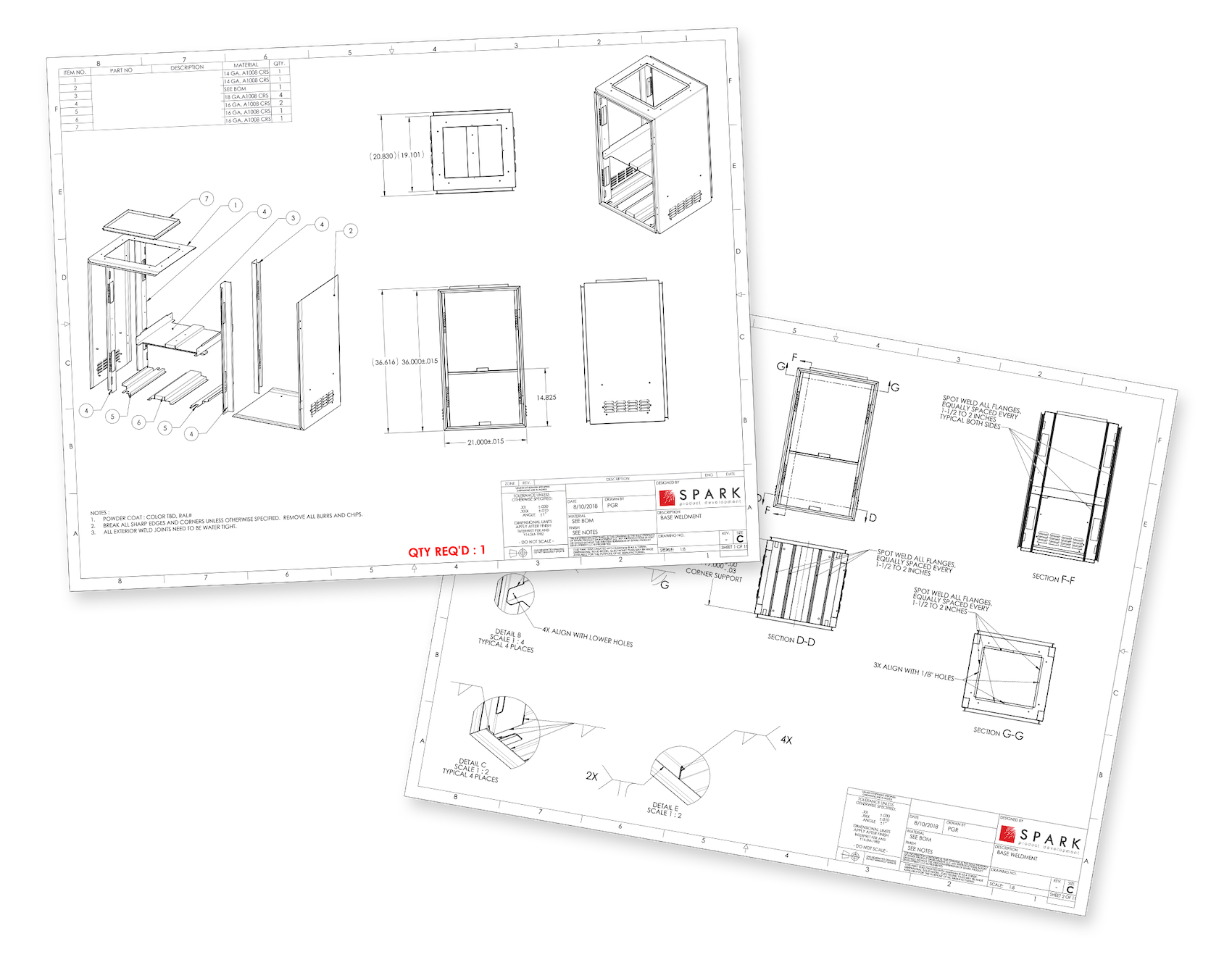
A sheet metal drawing can look complete and still leave uncertainty for the fabricator without these questions considered:
Can this tolerance actually be held?
Is this dimension critical, or is there room for variation?
Can the part be made with the available tooling?
How is this component supposed to interface with the rest of the assembly?
None of those questions necessarily means the design is bad. Sheet metal simply introduces manufacturing realities that can be difficult to fully anticipate without significant fabrication experience.
The trouble starts when those questions aren't answered until the design reaches the fabricator.
Brent Frey, Director of Sales at EVS Metal and a vendor for SPARK, described how different that feedback loop looks today. When manufacturers were more vertically integrated, an engineer could often walk onto the shop floor and learn immediately why something wasn't achievable. Now, engineering and fabrication are frequently separated by geography, organizational structure, and purchasing processes.
As Brent put it, what might have been a 30-minute conversation can instead become “three weeks of emails back and forth and still without a better understanding of how to design in this way.”
Multiply that by dozens of parts and the effect becomes much easier to see. Brent described one customer that needed roughly 150 parts, about 60 of which required fabricator feedback more complicated than a simple email.
That's a lot of manufacturing questions to discover after the clock is already running.
Moving faster can sometimes make the project take longer
When a deadline is getting close, the instinct is understandably to protect the schedule. Teams shorten reviews, release work before every question is resolved, or decide there isn't time for another prototype or pilot build.
But if the design still contains unanswered manufacturing questions, eliminating those steps doesn't eliminate the questions. It just moves them somewhere else in the process.
Brent described that same customer as having “a hard deadline,” to the point that they “chose to skip a pilot build right into production” because of the pressure to install within a certain window. In the end, he said, “the whole thing missed the target and ended up taking an extra 6 months before production.”
The lesson isn't that every project needs a longer development cycle or more rounds of review. It's that manufacturing questions don't disappear just because the schedule has stopped making room for them.
A few hours spent resolving an unrealistic tolerance or reviewing a critical assembly interface can feel like time added to the front of a schedule. But if it prevents several rounds of clarification and revision later, it may actually save you a lot of time in the long run.
Sheet metal production tends to reveal problems that started somewhere else
One reason sheet metal gets blamed for delays is that fabrication is often where earlier assumptions finally encounter physical constraints.
CAD doesn't have to fit a large part in a press brake. A drawing doesn't experience variation in material thickness. And reviewing individual components doesn't necessarily tell you how well they'll work together once the full product is assembled.
These problems only show up once the design is in the hands of the fabricator. So the fabrication stage looks like the source of the problem even when it's really where the problem was discovered.
This distinction matters because it changes what you can do about it.
If the problem is simply that your fabricator is too slow, your options are fairly limited: push harder, pay to expedite, or find another supplier.
But if the problem is that fabrication keeps uncovering unresolved design questions, you have many more options.
How to catch sheet metal problems before they reach the shop floor
The goal isn't to make the design process longer. It's to move manufacturing insight earlier.
Before you release a sheet metal design, ask yourself:
Are the critical tolerances actually achievable?
Check whether the tolerances reflect what the part really needs and what the fabrication process can reliably hold.
Are the bends and features realistic for fabrication?
Look for anything that may depend on tooling, setup, or forming conditions that haven’t been considered yet.
Have the interfaces between components been reviewed?
Don’t just review each part on its own. Look at how the full assembly comes together.
Are the inspection requirements clear and reasonable?
Make sure the drawing tells the fabricator what truly needs to be controlled and verified.
Is anything forcing the fabricator to guess?
Look for ambiguous notes, unclear dimensions, or places where the supplier may have to interpret your intent.
Has someone with hands-on fabrication experience reviewed it?
Get manufacturing input before the design is locked, when changes are still relatively easy to make.
The CEO of a high-growth sheet metal firm, and a client of SPARK, described exactly that kind of process that incorporates the above points. Before starting a project, they said, the engineering team develops a preliminary drawing that manufacturing reviews, with subject matter experts weighing in before release: “So hopefully we can catch as many of the issues as possible.”
That becomes especially valuable when the schedule has very little room for error. In this CEO's industry, “trucks are now booked weeks in advance” and cranes may already be scheduled for equipment arriving on site. Their description of what happens when those dates slip is straightforward: “the cost to delay is astronomical.”
The good news is that many of the issues capable of creating those delays are much less intimidating when they're found earlier. A tolerance can be reconsidered. A drawing can be clarified. An interface can be reviewed. A fabricator can answer a question before the design is released instead of after a part has been made.
And once you start looking upstream, a schedule that once felt mysteriously unpredictable can become much easier to understand.
If your team keeps losing time between engineering and production, don't start by asking how everyone can move faster. Start by looking at where the questions, revisions, and workarounds are entering the process in the first place.
That's usually where you'll find the time you keep losing.
SPARK has spent decades working at the intersection of sheet metal design and fabrication. If you're trying to understand why a project keeps getting stuck, we're always happy to help you look upstream. Feel free to reach out.