

One of the more frustrating problems with a sheet metal assembly is when everything looks right individually, but doesn't work when you put it together.
The drawings may have been reviewed and the individual components may look perfectly reasonable on their own. It’s only when the full assembly comes together that the problems become apparent: holes don't line up, connections are difficult to make, or components don't interface the way everyone expected.
It can feel like something must have gone wrong in fabrication. Sometimes, though, the problem is that everyone did a good job reviewing the individual pieces, but nobody had enough opportunity to look at what happens when all of those pieces become a system.
A good part isn't necessarily a good assembly
Sheet metal designs naturally get divided into manageable pieces. Different people may own different components. Drawings get reviewed individually, and parts may be fabricated by different suppliers or at different times. Each decision can make sense on its own while still leaving unanswered questions about how everything will work together.
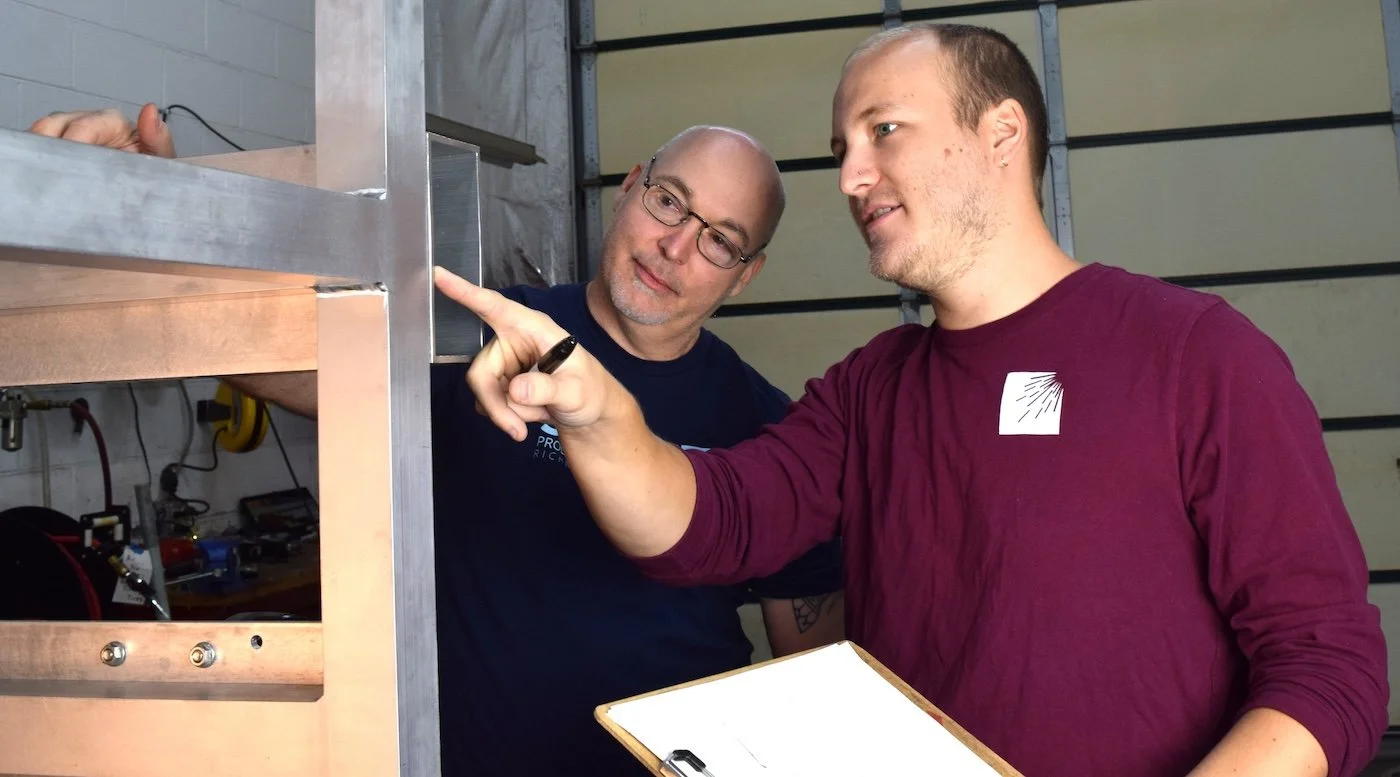
The CEO of a high-growth sheet metal firm, and a client of SPARK, talked about the question their team keeps in mind when looking at complex equipment: “Yep, the tank looks great. Yep, the enclosure looks great. Well, what happens when you put it all together?”
This CEO and their team give us a great example to follow. At their firm, preliminary drawings are reviewed by manufacturing subject matter experts before release, giving the people who understand how the equipment will actually be built an opportunity to weigh in early. As the CEO put it, the goal is to “catch as many potential issues as possible.”
That kind of review becomes increasingly important as sheet metal assemblies get larger and more complicated. Instead of asking only whether each individual component works, the team is looking at the complete equipment: how major sections align, how components connect, and what will have to happen when everything is assembled.
The goal isn't more review for the sake of more review. It's making sure the design gets reviewed at the same level at which it ultimately has to work.
“Everything fits on paper”
Bill Barron, Senior Mechanical Engineer at Silicom, a client of SPARK, described another version of the same disconnect with a phrase that captures it particularly well:
“Everything fits on paper.”
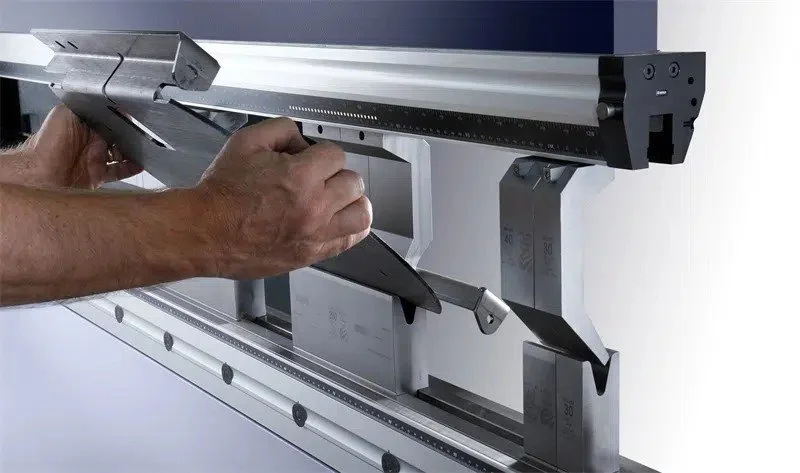
A CAD model can tell you a great deal about a sheet metal design. What it can't replace is an understanding of what happens when that design moves through fabrication and into physical assembly.
Bill learned that through experience. Earlier in his career, he worked close enough to fabrication that he could walk the shop floor and see how the things he designed were actually being made. He recalled one particularly direct lesson when “a welder threw a piece on my desk and said, ‘I can't make this design.’”
Although getting a part thrown on your desk probably wouldn’t happen today, that kind of feedback builds knowledge that is difficult to get from the screen alone. You start to understand not only whether a component can theoretically be made, but where fabrication and assembly are likely to introduce questions that deserve attention before the design is finalized.
The problem is that many engineering teams don't have easy access to that feedback anymore.
Bill described “a gulf between the book smart and the street smart” in engineering, in part because engineers may have fewer opportunities to spend time around the people and equipment actually making their designs.
That doesn't make the engineering less sophisticated. It means there are things about fabrication and assembly that are much easier to see when the people who understand those processes are part of the conversation.
The high-growth sheet metal firm’s approach offers a useful model: don't wait until assembly to find out what manufacturing knows.
How to review the whole assembly, not just the parts

Before releasing a sheet metal assembly, take a step back from the individual drawings and review what will happen when everything comes together.
Trace where the major components meet. Look at the connection points between parts, enclosures, or larger sections of the equipment. Will openings, mounting points, doors, and other features be where they need to be once the pieces are assembled?
Look at tolerances across the assembly, not just on individual parts. A tolerance that makes sense for one component can still affect how that component aligns or connects with the parts around it. Pay particular attention to areas where multiple parts have to come together accurately.
Walk through the assembly process. Think about the order in which the equipment will actually be put together. Is there enough access to make the necessary connections? Does assembling one component affect the ability to install another?
Think beyond the CAD model to installation. Consider what has to happen when the finished equipment reaches its destination. Look for anything that could make alignment, connection, access, or installation more difficult than it appears on the drawing.
Have manufacturing review the preliminary design. Bring in people who understand how the equipment will actually be fabricated and assembled before the drawings are released. Ask specifically what they see that could create problems on the floor.
Capture what manufacturing changes. If someone on the floor has to adjust or compensate for the design, make sure that change gets back into the drawings and documentation. Otherwise, part of your design effectively lives with the person or fabricator who knows how to make it work. Take the original drawings somewhere else, and you may have to solve the same problems all over again.
The goal is to catch these issues before the design reaches fabrication or assembly, when there’s still time to address them deliberately. Reviewing individual components is important, but for a complex sheet metal assembly, it’s only part of the job.
Individual parts still need to be right. But so do the relationships between them.
Before release, take one more look at the design from the perspective of the people who will have to fabricate it, assemble it, and make all of those individual parts work together.
SPARK brings decades of experience in designing sheet metal assemblies, helping teams spot potential issues before they reach the shop floor. If you’d like another set of experienced eyes on your design, reach out. We’re always happy to take a look.